
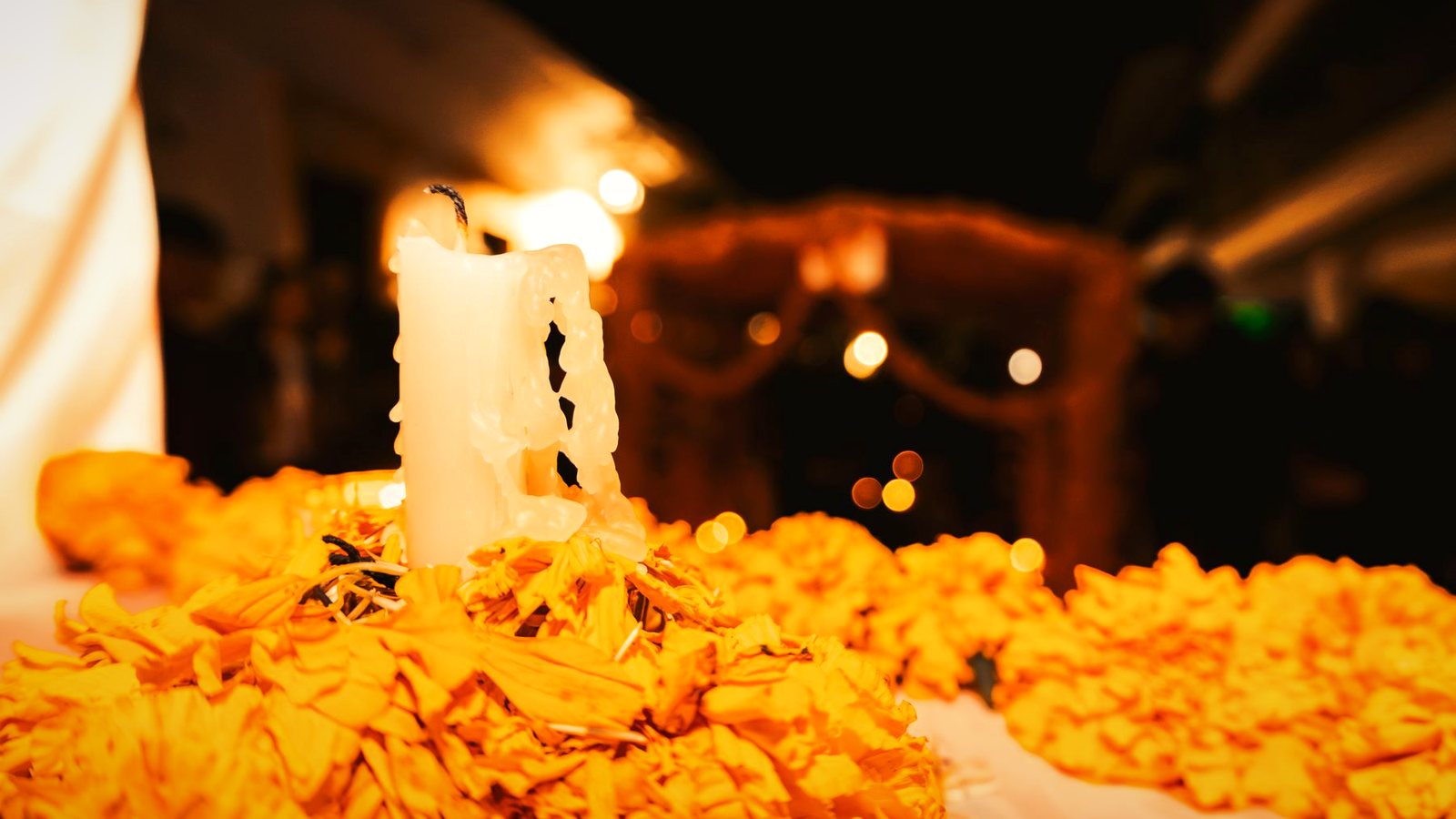
On November 1 and 2, families in Mexico, and in Mexican communities elsewhere, set out candles, flowers and favorite foods to welcome back the people they have lost. This is Día de Muertos, the Day of the Dead, and it is a celebration of love and memory rather than fear.
What the days are
Día de Muertos is not a Mexican version of Halloween. It has deep Indigenous roots, shaped over time by the Catholic observances of All Saints and All Souls, which fall on the same dates. In many places the first day is set aside to remember children who have died, and the second to remember adults. UNESCO has recognized the tradition as part of the intangible cultural heritage of humanity.
Customs vary from region to region and even from family to family. Oaxaca is well known for its elaborate observances, and what you read here is only a small, general sketch.
The ofrenda
At the center is the ofrenda, an altar built at home or at a grave. It usually holds photographs of the people being remembered, candles, and marigolds called cempasúchil, whose color and scent are said to guide the dead home. Pan de muerto (a sweet bread), sugar skulls, papel picado (cut paper banners), water and copal incense are common too, along with whatever the person loved to eat and drink.
Families often spend time at the cemetery, cleaning and decorating graves, sharing food and telling stories. The point is presence: to sit with those who are gone, and to keep their names spoken.
Where mezcal fits
Because an ofrenda is built around the favorites of the person being remembered, a small glass of their preferred drink may sit among the dishes. For some families, that drink is mezcal. This is a tradition that belongs to the people who keep it, for reasons that matter deeply to them, and we have no wish to turn it into a theme. But if mezcal is part of how you remember someone, it belongs at the table, poured slowly and shared with respect.
Aldez Mezcal is made for sipping neat. Ensamble, at 45% ABV (90 proof), has a long, semi-sweet finish that suits a quiet evening and a few good stories. Espadín, at 44% ABV (88 proof), finishes long, warm and sweet.
A respectful way to take part
- Learn before you borrow. Read about the holiday from the communities who observe it.
- Skip the costumes and party decorations. This is not a theme night.
- If you are invited to someone’s ofrenda, ask what is welcome and follow the family’s lead.
- If you want to honor someone in your own way, set out a photograph and a candle, pour a small glass of something they loved, and say their name aloud.
- Keep it small and slow. A single glass, sipped over a long conversation, says more than many.
The best way to experience more of a tradition is to listen first. Ask the people who keep it what it means to them, and let their answers do the teaching. Quench your curiosity with respect, and raise a quiet glass to the people who are missed.
Please enjoy responsibly.