
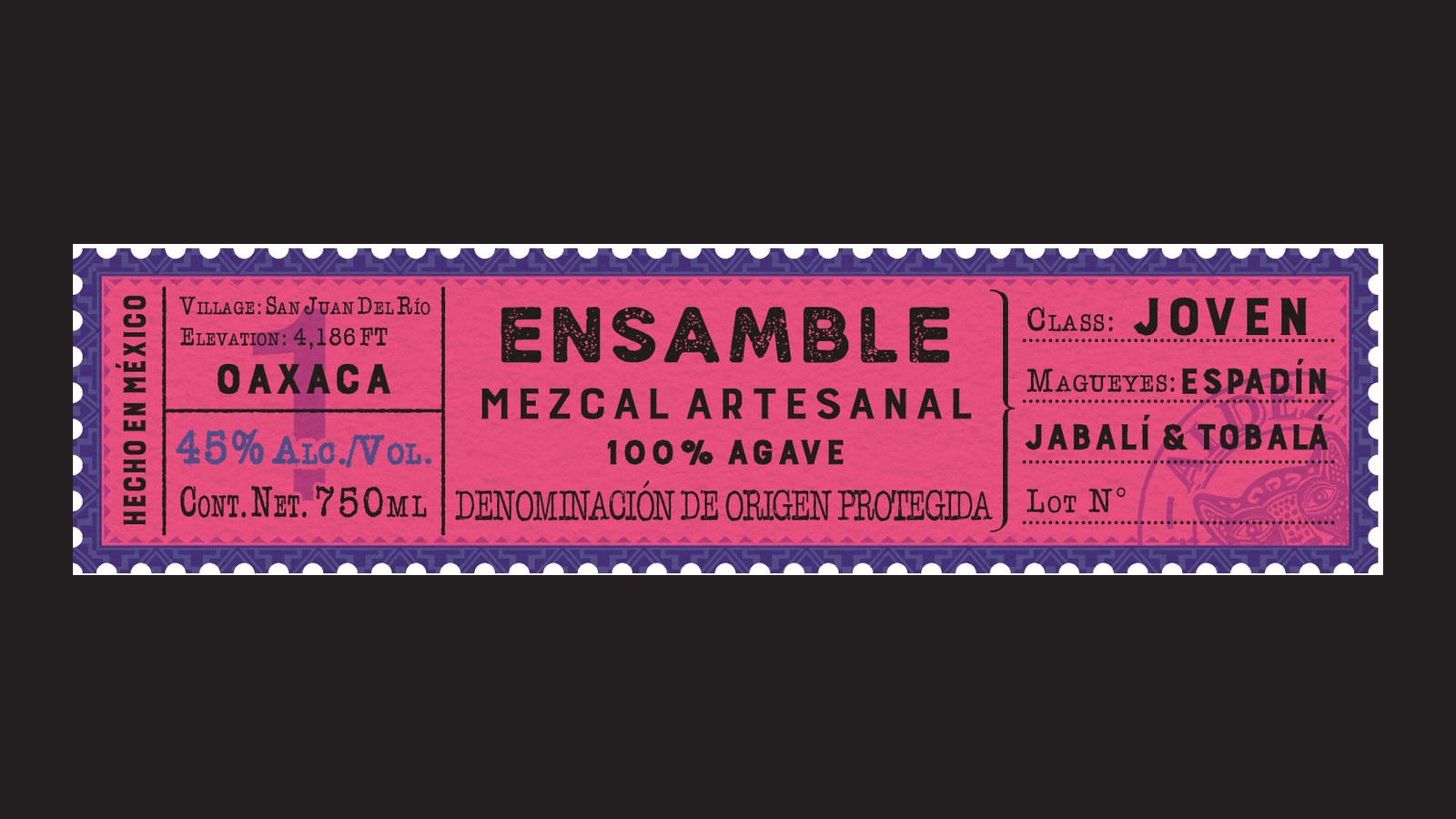
Turn the bottle around and read it slowly. A mezcal label carries a surprising amount of information, and most of it is useful once you know the vocabulary. Many spirits ask you to trust a brand name. Mezcal tends to tell you where it was made, from what, and how strong it is. Here is how to read each line, using an Aldez Mezcal bottle as our example.
The words that describe what is inside
Mezcal Artesanal. This is the category. Mexican rules recognize three, and Artesanal is the middle one: it points to traditional, handmade methods such as cooking the agave in a pit oven and crushing it with a tahona. Aldez Mezcal is a Mezcal Artesanal, and the words are set apart from the brand name on the front label.
Joven. This is the class, which describes aging. Joven means young. It is the class for mezcal bottled without the aging in wood that reposado and añejo receive, so what you taste is the agave and the process, not a barrel.
100% Agave. The sugars that were fermented came from agave and nothing else.
The agave names. Labels list the agaves used, in order of decreasing quantity. Aldez Mezcal Espadín lists one: Agave Angustifolia. The Ensamble back label reads Angustifolia, Convallis and Potatorum, which are the botanical names for Espadín, Jabalí and Tobalá. You may also see the word maguey, which is simply another name for the plant. Agave names are one of the best clues to flavor, because each variety brings its own character. Espadín leans toward green apple and caramel, for example, while Tobalá moves toward cacao and pepper.
Where it comes from
Village and elevation. On our label you will find “San Juan del Río” and “4,186 ft.” That is unusually specific, and it is worth appreciating. It tells you the exact place the agave was grown and the spirit was made, and how high above sea level it sits.
Oaxaca. The state. Oaxaca is one of the states within the mezcal denomination of origin.
Denominación de Origen Protegida. A protected designation of origin ties the name “mezcal” to specific regions of Mexico and to rules about how it is made. When you see these words, the bottle is claiming a place and a standard.
Hecho en México. Made in Mexico, which is printed on the main surface for bottles that travel.
How strong, how much, which batch
Alc./Vol. This is alcohol by volume. Aldez Mezcal Ensamble is 45%, and Espadín is 44%. In the United States, proof is double the percentage, so those are 90 proof and 88 proof. These are higher-proof mezcals, which is part of why they sip so well neat: the flavor is concentrated, and a small pour goes a long way.
Cont. Net. The amount in the bottle. Ours is 750 ml.
Lot N°. The batch number. This one is easy to overlook and fun to follow. Because Ensamble is a blend of three agaves and every production is unique, two lots can taste a little different from each other, and the lot number lets you compare them.
Once you can read the label, you can compare bottles on facts instead of marketing. Start with the agaves, then the place, then the proof, and see what the bottle tells you before you pour it. If you are curious which line surprises you most, take a bottle off the shelf this week and read it top to bottom. Quench your curiosity.
Please enjoy responsibly.