
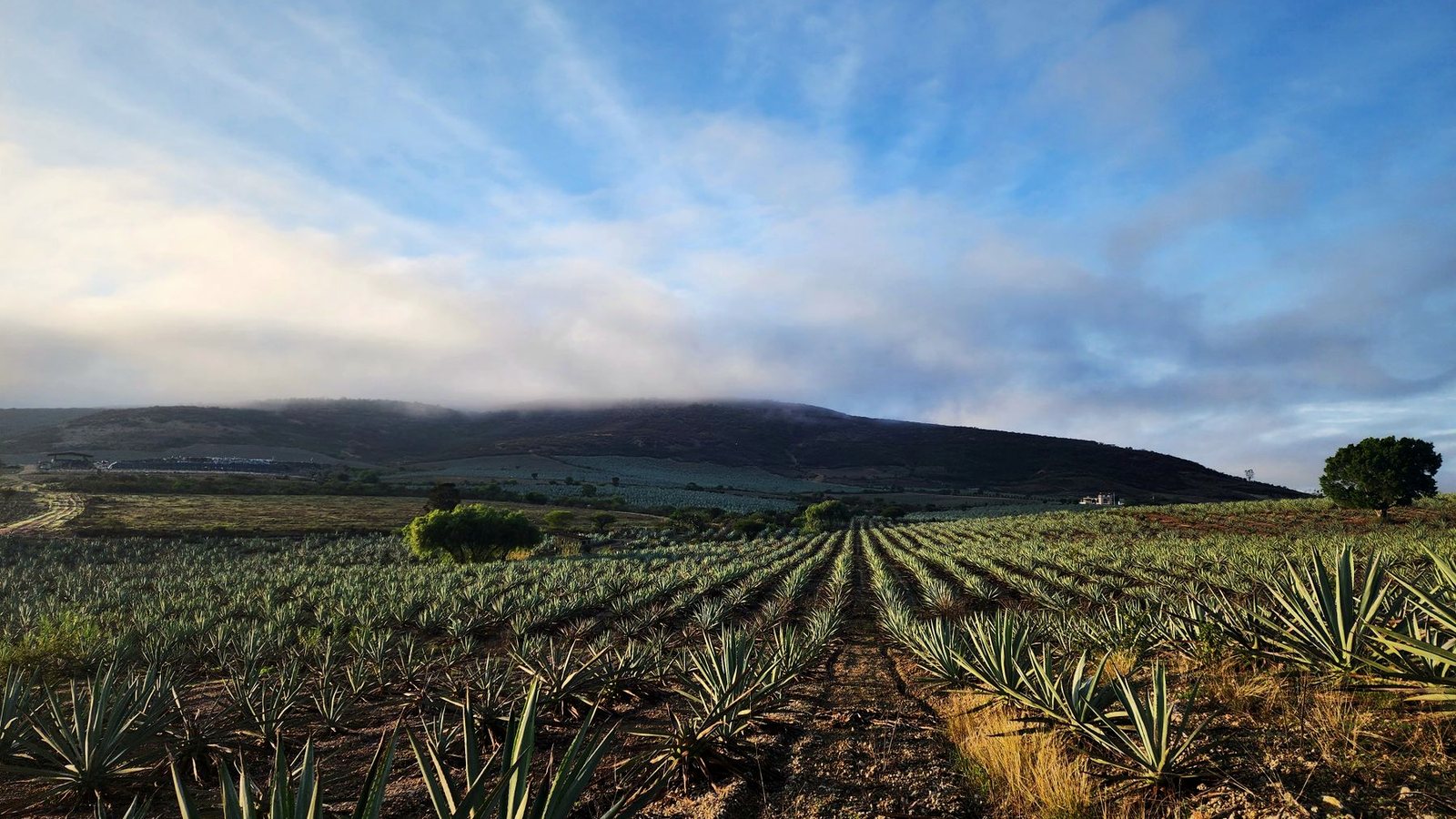
Ask ten people what separates mezcal from tequila and you will probably hear about smoke, plus a vague sense that one is rougher than the other. Most of that is noise. The real differences live in the plant, the cooking, the crushing and the place. None of them make one spirit better than the other, and all of them are worth understanding.
Start with the plant
Both are agave spirits, which is why they are cousins. Tequila is made from a single species, Weber blue agave, and is produced mostly in Jalisco and a few neighboring areas. Mezcal can be made from many species of agave and is produced in Oaxaca and several other regions of Mexico.
Aldez Mezcal Ensamble shows what that freedom looks like. It blends three agaves: Espadín (Agave Angustifolia), Jabalí (Agave Convallis) and Tobalá (Agave Potatorum). Two of the three are wild, and they take anywhere from 7 to 18 years to mature.
Cooking and crushing
Traditionally, mezcal is cooked in earthen pit ovens, and that is where much of its smoky signature comes from. Aldez Mezcal is cooked in a stone-lined conical pit oven. Tequila is more often cooked in brick ovens or steam autoclaves, a different method that tends to highlight a brighter, more straightforwardly sweet cooked agave flavor.
Crushing differs too. Aldez crushes its cooked agave by tahona, a large stone wheel. Some tequila producers use a tahona as well, but many use mechanical mills. After that, Aldez ferments naturally in wooden tanks and distills twice in copper pot stills, then mixes with water before bottling.
Smoke is a spectrum
Not every mezcal tastes like a campfire. How much smoke you find depends on the agave, the oven and the maker. Ensamble offers subtle smoke alongside agave and earth, and its nose is cooked agave and campfire. Espadín, a single agave, is not as smoky as traditional espadíns, with a nose of cooked agave, green apple and wood.
Tequila has depths of its own, from cooked agave and citrus to pepper and, when it spends time in barrels, hints of oak and vanilla. At its best it is complex and delicious in its own right, and it has earned its admirers.
The quick version
- Plant: tequila uses Weber blue agave only. Mezcal can use many agave species.
- Cooking: mezcal is traditionally cooked in pit ovens. Tequila is often cooked in brick ovens or autoclaves.
- Crushing: Aldez uses a tahona. Methods for tequila vary.
- Smoke: common in mezcal, but not universal, and never the only flavor.
- Place: each has its own protected name and region. Aldez Mezcal carries the Denominación de Origen Protegida and comes from San Juan del Río, Oaxaca.
So which one?
This is not a contest. Choose by the moment and by what you are curious about. If you love tequila, you already love agave, which is a head start. If you enjoy sipping spirits that reflect the plant and the place, mezcal is worth exploring.
A friendly place to begin is to make a margarita the way you usually do, then make a second with Espadín and compare the two. Or pour a little Ensamble neat and see what you find. Quench your curiosity, and let both spirits earn their place on your shelf.
Please enjoy responsibly.